
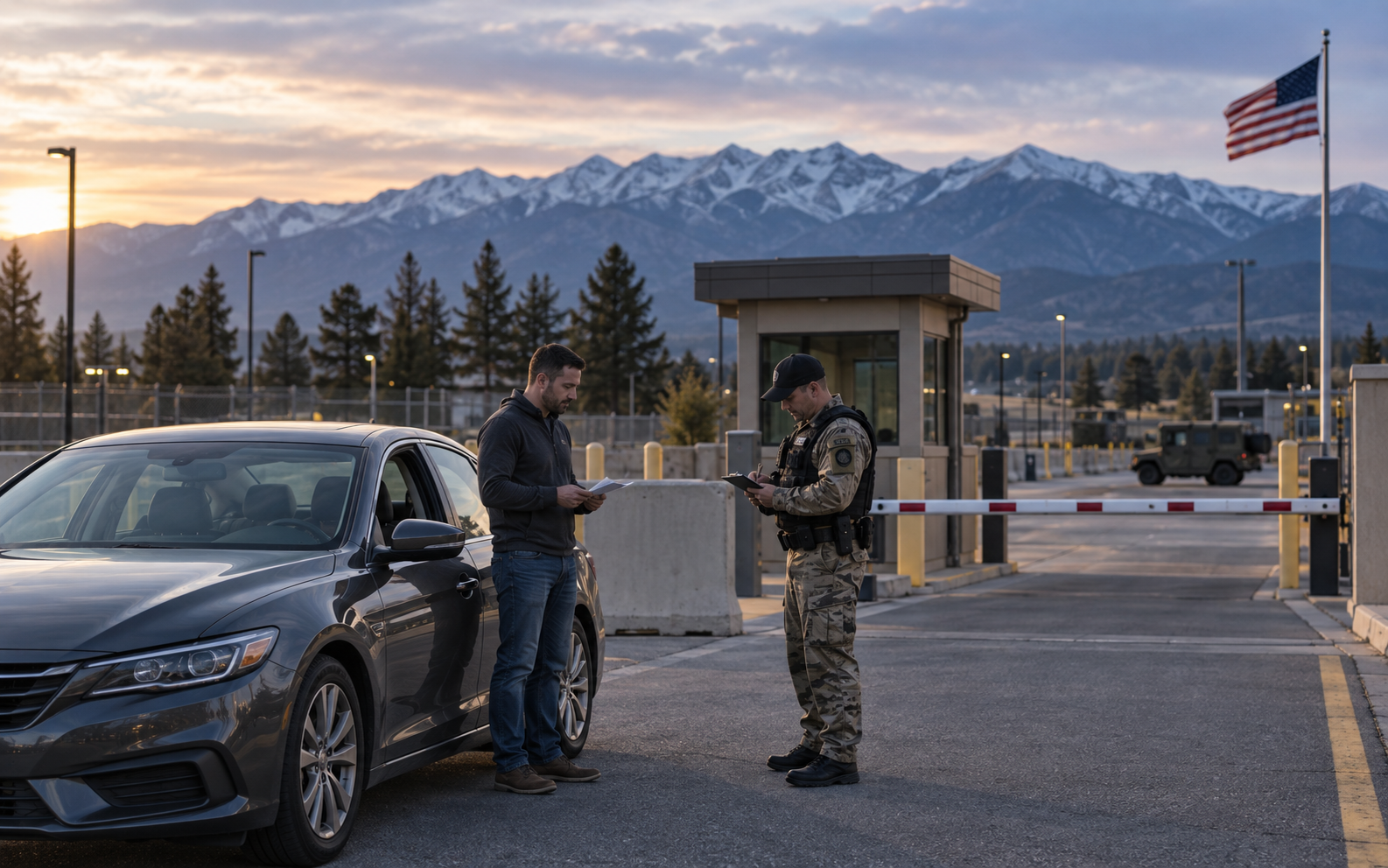
A DUI allegation on a Colorado military installation can start more than one process at the same time. Depending on the exact location, your military or civilian status, the agency involved, the test request, and the paperwork you received, you may face a federal ticket or court matter, a Colorado driver’s-license case, an installation-driving action, and separate command, clearance, access, or employment questions. Not every on-base DUI follows all four tracks.
Your first objective is not to solve every issue overnight. It is to identify each track, protect the shortest deadline, and avoid a decision in one system that creates a problem in another. Maher & Maher’s overview of federal and on-base DUI defense in Colorado Springs explains why the paperwork, location, and timing matter from the beginning.
Why an On-Base DUI May Follow a Different Legal Path
A military installation is federal property, but that fact alone does not answer every jurisdiction question. The type of federal jurisdiction at the exact location, the driver’s status, the charging authority, and the code printed on the ticket can all matter. Under the Assimilative Crimes Act, 18 U.S.C. § 13, federal law can adopt state criminal law for conduct in qualifying federal areas when no federal enactment already makes the conduct punishable. In a Colorado case, that can make Colorado impaired-driving law relevant even when the case is handled in federal court.
The Four Tracks to Check After a Military-Base DUI
The safest working rule is simple: treat each track as separate until the documents show otherwise. A favorable development in one system may not automatically end the others, and the deadlines may not line up.
| Possible track | The first question to answer |
|---|---|
| Federal ticket or court | What document was issued, what offense code appears, and is a court appearance required? |
| Colorado driver’s license | Was a Notice of Revocation issued, and is a separate hearing deadline running? |
| Installation driving | Were on-base driving privileges suspended or restricted under a separate notice? |
| Military, clearance, or employment | What reporting, command, access, or workplace rules apply to this person? |
What to Do in the First 24 Hours
- Preserve every page you received. Keep the ticket, Violation Notice, test documents, temporary license, Notice of Revocation, release paperwork, installation-driving notice, court instructions, and command correspondence together. Photograph both sides of every document.
- Identify the issuing agency and exact location. Write down where the stop began and ended, which gate or road was involved, and whether military police, Department of Defense police, state patrol, or another agency handled the contact.
- Read the document instead of guessing from its appearance. A ticket labeled “U.S. District Court Violation Notice” is processed through the federal ticket system. The Central Violations Bureau explains that Box A signals a mandatory appearance, while Box B provides a pay-or-appear choice. Do not choose a response until you understand the offense code and collateral consequences. Review the CVB’s current options before taking action.
- Check for a Colorado license notice. If a Notice of Revocation was served, a short DMV hearing deadline may already be running. The federal court date does not replace that deadline.
- Follow every written no-driving or access order. A valid state license does not necessarily authorize you to drive on the installation. Arrange transportation and do not risk a separate allegation for violating a suspension or order.
- Get advice before giving a detailed account. You may need to communicate with a court, licensing agency, command, security office, or employer. First understand what must be reported, to whom, and by when.
What to Check During the First Seven Days
A Possible Colorado DMV Hearing Deadline
Colorado’s administrative license process is independent of the criminal case. Under the current version of C.R.S. § 42-2-126, a person who receives a Notice of Revocation generally must request a hearing in writing within seven days after receiving, or being deemed to have received, that notice. The important caveat is that not every base incident produces the same Colorado notice or trigger. Check the documents rather than counting seven days from the stop by default. Maher & Maher also explains when to request a Colorado DMV hearing.
A Separate Installation-Driving Notice
Driving on a military installation is a separate privilege. 32 C.F.R. § 634.9 authorizes suspension or revocation of installation-driving privileges and permits an immediate suspension in specified intoxicated-driving circumstances. Section 634.11 provides administrative due-process rules while also allowing service-specific procedures. Read the notice for the deadline, hearing method, and authority that applies to your installation. Do not assume Fort Carson and an Air Force or Space Force installation use identical procedures.
What May Happen After the First Week
Federal Ticket or Court Dates
If you received a federal Violation Notice, the Central Violations Bureau processes that ticket. A mandatory appearance may be printed on the notice, or a Notice to Appear may arrive later. Keep your address current with CVB when required, calendar every date, and have the exact charge reviewed. Learn more about a federal ticket after a base DUI before paying, pleading, or assuming the matter is routine.
Testing and Implied-Consent Issues
Testing can create more than one issue. Federal implied-consent law, 18 U.S.C. § 3118, may apply after a qualifying arrest within federal territorial jurisdiction. Military-installation rules also address consent to evidentiary testing and notice to licensing authorities in 32 C.F.R. § 634.8. Colorado’s express-consent system may present a separate question. The warnings given, test requested, result or refusal, jurisdiction, and paperwork must be evaluated together.
Command, Clearance, Access, or Employment Questions
For a service member, one incident may lead to command review, a referral, or an administrative or disciplinary process. For a clearance holder, official SEAD 3 reporting guidance identifies a DUI incident as something that should be reported to the security office. Reporting does not mean automatic clearance loss. Eligibility decisions consider the whole person, and the applicable agency controls the process. Civilians and contractors may face separate access or workplace rules, but an arrest does not create one universal employment outcome.
A Defense Strategy Built Around What Happens Next
A military-base DUI can create several separate problems from one incident. The defense strategy must account for each one without treating a federal charge, Colorado driving privileges, installation access, and military concerns as though they are controlled by the same authority.
Investigate
Maher & Maher begins by reconstructing what happened from the first officer contact through release. This includes confirming where the alleged driving occurred, determining which government entity claims jurisdiction, reviewing what the driver was told about testing, and comparing the official account with recordings, documents, physical evidence, and witness information. The objective is to find the decision points that shaped the case and identify facts the initial report may not fully explain.
Challenge
Once the case is mapped, the firm tests whether the government can support each required part of its allegation. That may include questioning whether the correct court has authority, whether the officer lawfully initiated and extended the detention, whether impairment observations are consistent with the available video, and whether breath or blood evidence was obtained and handled reliably. A military installation does not lower the government’s burden or make its version of events automatically correct.
Advocate
The next step is to pursue the defense while helping the client make informed choices across the systems affected by the incident. A decision in the federal case may have implications for driving, installation access, employment, or military status, but those consequences are not interchangeable or predetermined. Joe Maher combines former prosecutorial experience, Marine Corps leadership, courtroom work, and specialized DUI training to bring disciplined judgment to a case that may otherwise feel fragmented and overwhelming.
Get clear on your next step before you make a decision.
Schedule a free defense consultation with Maher & Maher Law.
Frequently Asked Questions
Is a DUI on a Colorado military base always a federal case?
No. The exact location, type of federal jurisdiction, driver’s military status, issuing agency, and charging document can change the forum. A civilian or service member may receive a U.S. District Court Violation Notice or other federal paperwork. A service member may also face a separate military process. The citation and location must be reviewed before anyone can identify the path with confidence.
Can Colorado revoke my driver’s license after an on-base DUI?
Potentially. A Colorado administrative revocation is separate from the federal or military case, but the trigger and deadline depend on the testing, notice, reporting, and documents involved. If you received a Colorado Notice of Revocation, the hearing request is generally due within seven days after receipt or deemed receipt. Do not assume the federal court date controls the DMV deadline.
Can I lose on-base driving privileges even if my Colorado license is valid?
Yes. Installation driving is a separate privilege controlled by military regulations and the installation. A notice may impose an immediate suspension while the DUI allegation is pending, and separate procedures may govern a hearing, restricted privileges, or a later revocation. Follow the written order and review its deadline promptly.
Should I pay a federal violation notice for an on-base DUI?
Do not make that decision from the dollar amount alone. First determine whether Box A or Box B is checked, whether appearance is mandatory, what offense code is listed, and what payment could mean for the court case, driving record, employment, or military matters. Have the notice reviewed before paying or choosing to contest it.
Can an on-base DUI affect my command or security clearance?
It can raise command, reporting, access, or clearance questions, but no single outcome applies to everyone. Service rules, agency guidance, the facts, prior history, candor, and follow-through can matter. Follow your reporting requirements and get advice before making a detailed statement about the incident.
What should I bring to a lawyer after a military-base DUI?
Bring every page you received, including the ticket or Violation Notice, test paperwork, temporary license or Notice of Revocation, release documents, installation-driving notice, and any court or command correspondence. Also write down where the stop occurred, which agency contacted you, what tests were requested or completed, and every date shown on the paperwork.
Legal information, not legal advice: This article provides general information as of August 28, 2026. Jurisdiction, installation policies, service rules, licensing consequences, and deadlines can change and depend on the facts and documents in a particular case. Maher & Maher Law is not affiliated with the Department of Defense, any military installation, Trial Defense Service, Area Defense Counsel, or any federal agency.