
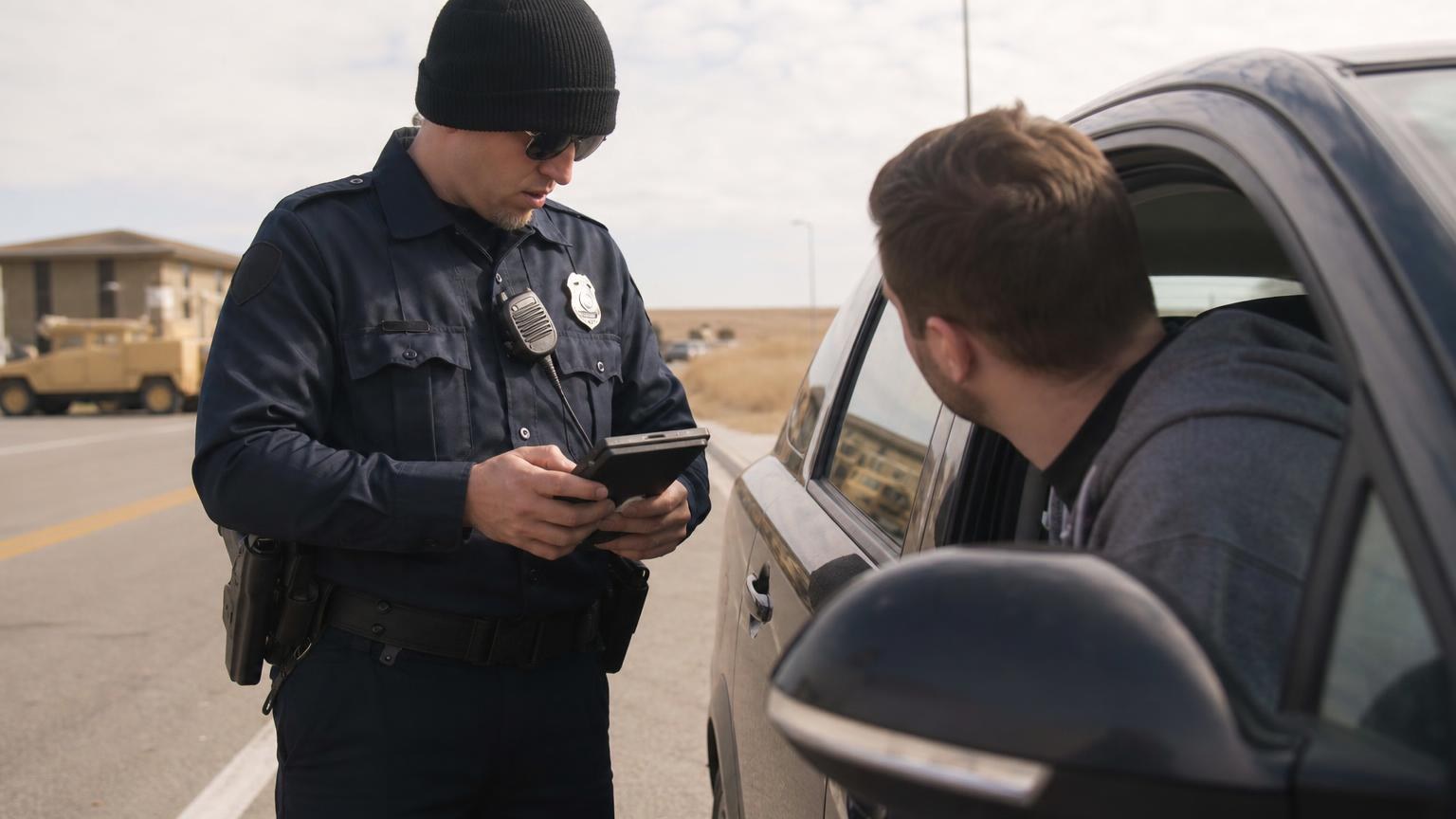
The biggest difference between an on-base and off-base DUI in Colorado is not simply who made the stop. It depends on which legal systems, location, driver’s status, and paperwork apply. An off-base arrest usually begins in Colorado state court. An on-base incident may lead to a federal ticket or court case, and a service member may also face a military process. Either incident can create separate driver’s-license, installation-driving, command, clearance, access, or employment concerns.
The practical rule is to identify each track before making a payment, plea, statement, or deadline decision. Maher & Maher’s guide to federal and on-base DUI defense in Colorado Springs explains why the exact road, agency, citation, and test paperwork matter more than the shorthand label ‘military DUI.’
On-Base vs. Off-Base DUI in Colorado at a Glance
| Question | On base: may involve | Off base: usually involves |
|---|---|---|
| Investigation | Military police, DoD police, or another agency may investigate. The exact road, gate, and jurisdiction matter. | Colorado State Patrol, sheriff, or local police usually investigate under Colorado authority. |
| Court or charging path | A federal Violation Notice, federal complaint, or other federal process may apply. A service member may also face a separate military process. | The criminal charge usually proceeds in Colorado state court. A separate military or administrative response may still follow. |
| Law applied | Federal law may use Colorado DUI law through the Assimilative Crimes Act. Service members may also be subject to UCMJ or administrative action. | Colorado DUI, DWAI, testing, evidence, and court rules generally govern the criminal case. |
| Public-road license | A Colorado or home-state licensing issue may arise from the notice, testing, reporting, or later disposition. It is separate from the federal or military case. | Colorado’s DMV process may begin alongside the criminal case and follows its own notice and hearing rules. |
| Installation driving | Installation privileges may be suspended immediately and later revoked through a separate administrative process. | For many affiliated drivers, an off-base incident can still affect installation privileges. Non-DoD-affiliated civilians may be treated differently. |
| Command, clearance, or employment | Possible, depending on status, rules, reporting duties, and the facts. No universal outcome applies. | Also possible. Crossing the gate does not prevent command, access, clearance, or employment concerns. |
| Counsel | Civilian federal DUI counsel may handle the court and license tracks. Service members may also need counsel for any subsequent command actions. | Colorado DUI counsel may handle court and DMV issues. Service members may also need counsel for any subsequent command actions. |
This matrix is a starting point, not a jurisdiction ruling. A road near a gate, an area with concurrent jurisdiction, a driver who is or is not subject to the UCMJ, or a different charging choice can change the answer. The most reliable evidence is the exact location and the documents actually issued.
An On-Base DUI Does Not Automatically Mean One Court
Federal Court May Use Colorado DUI Law
Military installations are federal property, but ‘federal property’ does not by itself identify the charge or forum. Under the Assimilative Crimes Act, 18 U.S.C. § 13, a federal court may use Colorado’s DUI offense to fill a gap in federal criminal law on qualifying property. The borrowed state provision supplies the offense framework, but the prosecution remains in the federal system.
Some federal-property matters begin with a U.S. District Court Violation Notice processed through the Central Violations Bureau. The CVB’s current guidance distinguishes mandatory-appearance notices from pay-or-appear notices and warns that payment may admit a criminal offense, waive the right to contest the ticket, and create driver-record consequences.
A Service Member May Also Face a Military Track
The Assimilative Crimes Act still applies to service members, and the offense can be assimilated under the UCMJ.
Civilians, contractors, dependents, service members, and visitors should not assume they are eligible for military defense services merely because the incident happened on an installation. Their federal or Colorado court case may require civilian counsel even when base access or employment issues are also involved.
An Off-Base Colorado DUI Can Still Cross the Gate
The Criminal and DMV Cases Usually Begin Under Colorado Law
Away from federal property, a DUI arrest normally proceeds under Colorado’s DUI and DWAI statute, C.R.S. § 42-4-1301, in Colorado state court. The public driver’s-license process is separate from the criminal case. If a Colorado Notice of Revocation or qualifying test result starts an administrative case, the DMV deadline may arrive long before the first meaningful court event. Maher & Maher’s Colorado DMV hearing guide explains the seven-day request rule that commonly applies after a qualifying notice.
An out-of-state license does not make the Colorado issue disappear. Colorado may act on a person’s privilege to drive in this state, and information may reach the licensing state. Before predicting an outcome, review the actual notice, test paperwork, and licensing record.
Installation-Driving Action Can Follow an Off-Base Incident
One of the most important comparison points is also one of the easiest to miss. 32 C.F.R. § 634.9 and installation-level policies authorize immediate suspension of installation-driving privileges for specified active-duty personnel, family members, retirees, DoD civilians, and other people with installation-driving privileges pending resolution of an intoxicated-driving incident, regardless of where the incident occurred. The rule limits off-installation suspension for non-DoD-affiliated civilians to incidents on the installation or in areas subject to military traffic supervision.
The reciprocal-action rule in 32 C.F.R. § 634.16 also directs commanders to recognize qualifying state suspensions or revocations. In practical terms, your driver’s license may look valid to the gate guard, but that does not always answer whether someone may drive through the gate, and an installation suspension does not necessarily revoke the public-road license. Read both records separately.
Testing Rules and Driving Rights Are Separate Questions
Testing on Federal or Military Property
A qualifying on-base investigation may involve more than one testing rule. 18 U.S.C. § 3118 addresses implied consent for chemical testing after a qualifying arrest in the special maritime and territorial jurisdiction of the United States. 32 C.F.R. § 634.8 separately treats people who drive on a military installation as having consented to evidential blood, breath, or urine testing when lawfully stopped, apprehended, or cited for an alleged driving offense on the installation.
Those federal and installation rules should not be blended casually with Colorado’s expressed-consent system. The warning given, test requested, result or refusal, exact jurisdiction, and notice to a motor-vehicle agency all matter. Roadside screening and evidential chemical testing are also different events and should be analyzed separately.
Three Driving Questions Must Be Answered
- Can the person drive on Colorado public roads?
- Can the person drive onto or within a military installation?
- Has a court, commander, release order, employer, or access authority imposed another restriction?
You can’t use the answer to one question as the answer to all three. Department of Defense rules provide notice and hearing procedures for installation-driving actions, but service-specific and local procedures can differ. 32 C.F.R. § 634.11 and installation-specific policies require a prompt review based on reliable evidence and describe hearing rights for covered actions while recognizing separate service procedures.
The Consequences Can Overlap in Either Location
| Track | Decision question |
|---|---|
| Criminal or court | Which charging document controls, and which court has the case? |
| Colorado driver’s license | Was a revocation notice issued or another licensing trigger created? |
| Installation driving | Has a separate suspension, revocation, or access restriction been issued? |
| Military, clearance, or employment | What status-specific reporting or administrative rules apply? |
The location usually changes the starting forum, not the need to check the other systems. A favorable result in Colorado court doesn’t automatically restore installation-driving privileges. A federal charge does not automatically decide the driver’s-license issue. An arrest does not automatically end a military career or security clearance, but it can create reporting and review questions.
Cleared personnel should follow the reporting instructions that apply to their agency, service, employer, or contract. Official SEAD 3 guidance directs covered individuals to their department or agency for the specific reporting method. Reporting is not the same as an automatic adverse clearance decision, and no single instruction fits every cleared person.
Who Handles Each Part of an On-Base or Off-Base DUI?
- Civilian defense counsel. Handles the Colorado or federal criminal case, investigates evidence, advises on court decisions, and coordinates the driver’s-license track.
- Civilian or military defense counsel. Advises eligible service members about military criminal or adverse administrative matters under service rules and priorities.
- Installation legal assistance. May provide general personal legal help but should not be assumed to represent someone in a criminal prosecution or adverse action.
- Security manager or clearance professional. Explains reporting and personnel-security procedures. This role is not a substitute for criminal defense counsel.
The real question is whether the defense team understands all the systems involved and can help prevent one decision from making another track worse. That requires defined roles and coordinated advice, not vague claims that one lawyer or office automatically handles everything.
What to Do Next, Wherever the Stop Happened
- Preserve the paperwork. Keep the front and back of every citation, Violation Notice, revocation notice, test form, release paper, driving suspension, and command or security communication.
- Pin down the location and agency. Record where the stop began and ended, including the gate, road, parking area, or boundary involved, and identify every agency present.
- Build one deadline list. Put federal or state court dates, Colorado DMV deadlines, installation hearing dates, and required reporting dates on one page without treating them as interchangeable.
- Follow written restrictions. Do not drive on public roads or the installation when a valid order or suspension prohibits it, and do not assume a pending challenge pauses the restriction.
- Coordinate before deciding. Have counsel review the evidence and collateral tracks before paying a federal notice, entering a plea, requesting a hearing, or giving a detailed statement.
Build the Defense Around What Changes at the Gate
Prove Which Side of the Boundary Controls
The comparison begins with geography and authority. Counsel should establish where the driving, stop, arrest, and testing occurred, then match those locations to the agency, citation, court, and jurisdiction claimed by the government. Gate records, maps, dispatch information, video, and the charging document can decide whether an assumption about an on-base or off-base case is correct.
Apply the Rules That Belong to That Case
Once the path is identified, the defense can test the stop, detention, officer observations, field-sobriety evidence, chemical-test process, equipment or laboratory records, and charging theory under the correct body of law. An off-base Colorado investigation and a federal-property case may involve similar evidence without creating identical legal questions.
Keep the Consequences From Being Blurred Together
The final plan assigns each decision to the authority that actually controls it: the court, Colorado DMV, the installation, or a military or employment process. That lets the client make informed choices without treating a development in one system as a guaranteed outcome in another. Joe Maher draws on DUI prosecution and defense experience, advanced DUI-science training, and three Iraq deployments as a Marine infantry officer. That background supports focused civilian representation when the location of a stop changes the legal path, but military concerns remain part of the client’s larger picture.
Get clear on your next step before you make a decision.
Schedule a free defense consultation with Maher & Maher Law.
Frequently Asked Questions
Is an on-base DUI in Colorado always prosecuted in federal court?
No. Federal court may be one path, but the answer depends on the exact location, the type of federal jurisdiction, the driver’s status, the agency involved, and the charging document. A person may receive a U.S. District Court Violation Notice or other federal charge, while a service member may also face a separate UCMJ or command process. Read the actual paperwork before deciding which forum controls.
Does an off-base DUI stay outside the military system?
Not necessarily. The criminal case will usually proceed under Colorado law, but a service member may still face command, UCMJ, administrative, readiness, or reporting questions. Installation-driving privileges can also be affected by an off-base incident for people covered by Department of Defense driving rules.
Can an on-base DUI affect my Colorado driver’s license?
It can. Military-installation rules allow violation information to be sent to a state motor-vehicle agency, and the documents or test evidence may create a separate Colorado licensing issue. The trigger and deadline depend on what was issued and reported. A federal court date does not replace a Colorado DMV deadline.
Can an off-base DUI suspend my driving privileges on base?
Yes. Department of Defense regulations authorize immediate suspension of installation-driving privileges for specified affiliated drivers pending resolution of an intoxicated-driving incident regardless of where the incident occurred. Non-DoD-affiliated civilians are treated differently. The installation notice and applicable service procedure control the next step.
Are the chemical-testing rules the same on base and off base?
Not necessarily. A qualifying on-base investigation may involve federal implied-consent law, assimilated state-law procedures, and/or military-installation testing rules. An off-base Colorado case generally involves Colorado’s expressed-consent system. The test requested, warning given, jurisdiction, result or refusal, and paperwork must be evaluated together.
Can Trial Defense Service or Area Defense Counsel handle the civilian or federal DUI case?
No. Military defense counsel can advise eligible service members about military criminal or adverse-action matters within their rules and priorities. That does not mean they handle a federal court case, Colorado criminal case, or DMV hearing. Civilian defense counsel and military counsel may need to coordinate while remaining responsible for different tracks.
What should I do first after any DUI involving a military installation?
Preserve every document, identify the exact location and issuing agency, note all tests and warnings, calendar each court, DMV, and installation deadline, follow written driving or access restrictions, and get legal advice before making a payment, plea, or detailed statement. The papers usually reveal which systems are already active.
Legal information, not legal advice: This comparison is general educational information reviewed on September 1, 2026. The boundary, agency, charge, driver status, test record, and notices determine which rules and deadlines apply. Maher & Maher Law is an independent civilian law firm and is not a part of a military installation, the Department of Defense, TDS, ADC, or a federal agency.