
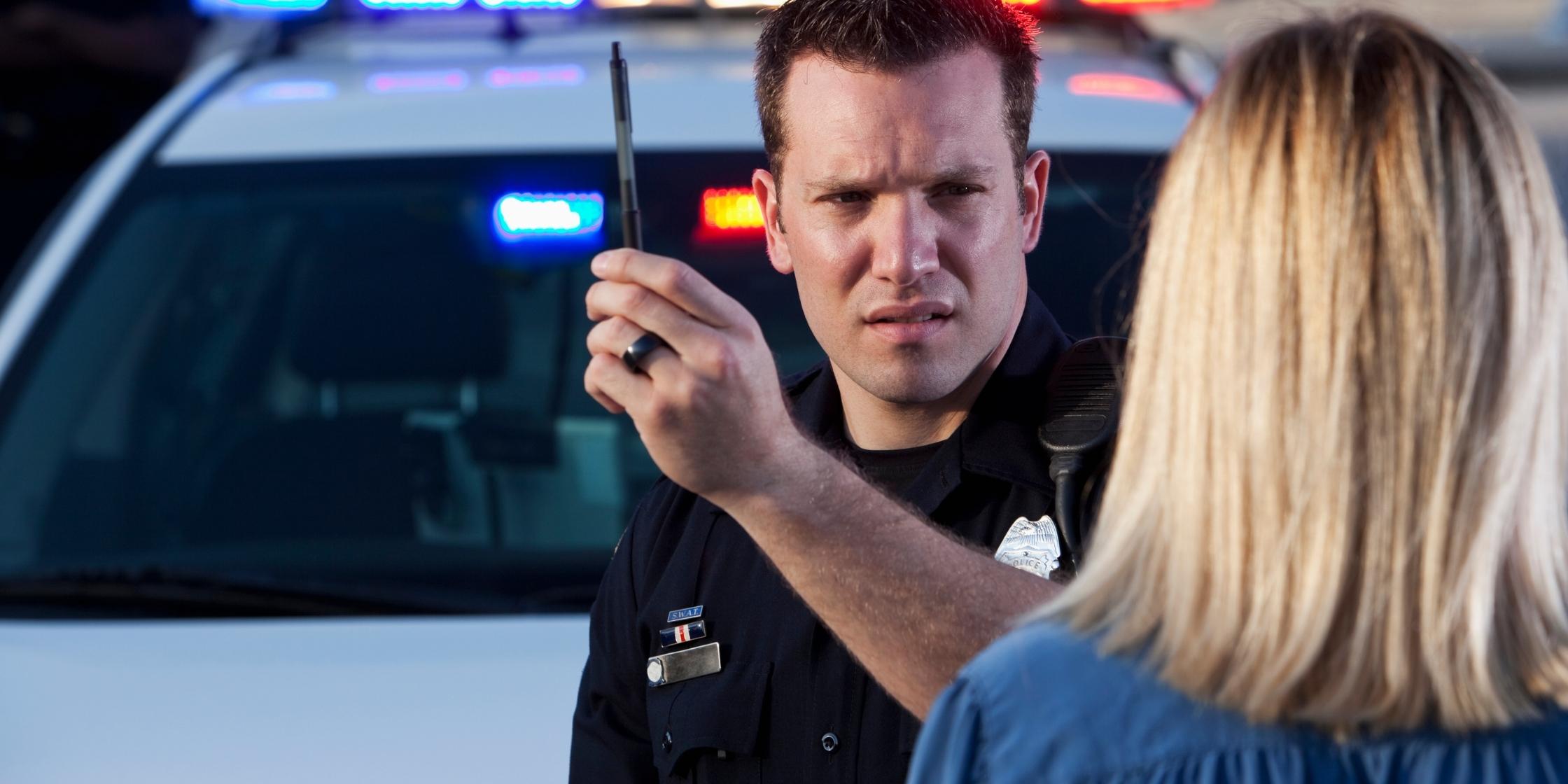
Quick answer: The standardized field sobriety test battery has three components: horizontal gaze nystagmus, walk-and-turn, and one-leg stand. Officers use their observations as part of a DUI investigation, but the exercises do not measure blood alcohol concentration and they are not the same as the blood-or-breath chemical testing covered by Colorado’s expressed-consent law.
Roadside conditions, instructions, physical limitations, footwear, weather, and whether an officer followed standardized procedures can all affect how a field sobriety test is performed and interpreted.
What are the three standardized field sobriety tests?
The National Highway Traffic Safety Administration’s standardized battery includes:
- Horizontal gaze nystagmus (HGN): The officer observes the eyes while the person follows a moving stimulus and looks for specified clues.
- Walk-and-turn: A divided-attention exercise involving instructions, heel-to-toe steps, a turn, and a return sequence.
- One-leg stand: A divided-attention exercise in which the person stands with one foot raised while following instructions.
NHTSA publishes detailed training materials covering the instructions, clues, test conditions, and administration sequence. Results can be questioned when the procedure, conditions, documentation, or interpretation do not match the evidence.
Field sobriety tests do not establish guilt by themselves
An officer may use roadside observations when deciding whether probable cause exists for an arrest. A prosecutor may later offer those observations as evidence. That does not make the officer’s interpretation conclusive. Video, medical history, the roadway surface, lighting, footwear, instructions, timing, and the officer’s training can all be relevant to evaluating the evidence.
Can you refuse roadside testing in Colorado?
It is important to separate three different things:
- Physical field sobriety exercises: These are roadside coordination and divided-attention exercises, not chemical tests that determine alcohol or drug concentration.
- Preliminary roadside breath screening: Colorado law requires an officer using this screening procedure to advise an adult driver that the driver may refuse or agree to provide a breath sample. The screening result may be considered in the probable-cause decision.
- Post-probable-cause chemical testing: Colorado’s expressed-consent statute can require completion of an evidentiary blood or breath test after an officer has probable cause to believe a driver committed DUI, DUI per se, DWAI, or UDD. Refusal or failure to cooperate can create separate driver-license and evidentiary consequences.
Therefore, refusing a roadside exercise should not be described as automatically causing the same license consequence as refusing a chemical blood or breath test. The facts, the type of request, the officer’s advisement, and the stage of the investigation matter.
Factors that may affect field sobriety test performance
- Uneven, sloped, wet, icy, or poorly lit surfaces
- Traffic, emergency lights, wind, noise, or other distractions
- Footwear or clothing that affects movement
- Age, weight, fatigue, anxiety, pain, injury, balance issues, or neurological conditions
- Language or hearing barriers
- Incomplete, confusing, or nonstandard instructions
- Failure to document or account for relevant medical limitations
What should a DUI lawyer review?
A defense review may include body-camera and dash-camera video, dispatch records, the officer’s report, the exact instructions given, demonstrated performance, test location and conditions, claimed clues, the officer’s training, chemical-test records, and medical information. The goal is to compare the report with the objective evidence and the applicable procedure.
Colorado Springs DUI attorney Joe Maher has completed participant and instructor training in standardized field sobriety testing. That training helps the defense evaluate how the exercises were administered and how the observations are described in reports and testimony.
Frequently asked questions
Can an officer arrest someone without field sobriety tests?
Potentially. An officer may rely on driving observations, speech, odor, admissions, physical appearance, preliminary screening, video, or other evidence when making a probable-cause decision. Whether probable cause actually existed is a case-specific legal question.
Are field sobriety tests the same as a breathalyzer?
No. The standardized physical exercises do not measure alcohol concentration. A preliminary roadside breath test is also legally different from the evidentiary breath or blood testing requested under Colorado’s expressed-consent statute.
Do poor results prove DUI?
No single roadside observation automatically proves guilt. The prosecution must prove every required element beyond a reasonable doubt, and the defense may challenge the reliability, administration, interpretation, or legal use of the evidence.
Does refusing a field sobriety test automatically suspend a license?
Do not confuse roadside exercises with expressed-consent chemical testing. Colorado’s administrative consequences focus on refusing or failing to cooperate with qualifying blood or breath testing after the statutory requirements are met.
Official sources
- NHTSA: DWI Detection and Standardized Field Sobriety Test resources
- Colorado Revised Statutes, Title 42—see §§ 42-4-1301 and 42-4-1301.1
- Colorado DMV: Alcohol DUI and expressed consent
- Colorado DMV: DUI administrative process
This page provides general educational information, not legal advice. DUI law and testing procedures can change, and the facts of each investigation matter.
Facing a DUI investigation or charge?
Maher & Maher Law can review the stop, video, roadside testing, chemical testing, and license deadlines. Learn about our Colorado Springs DUI defense services or request a consultation.