
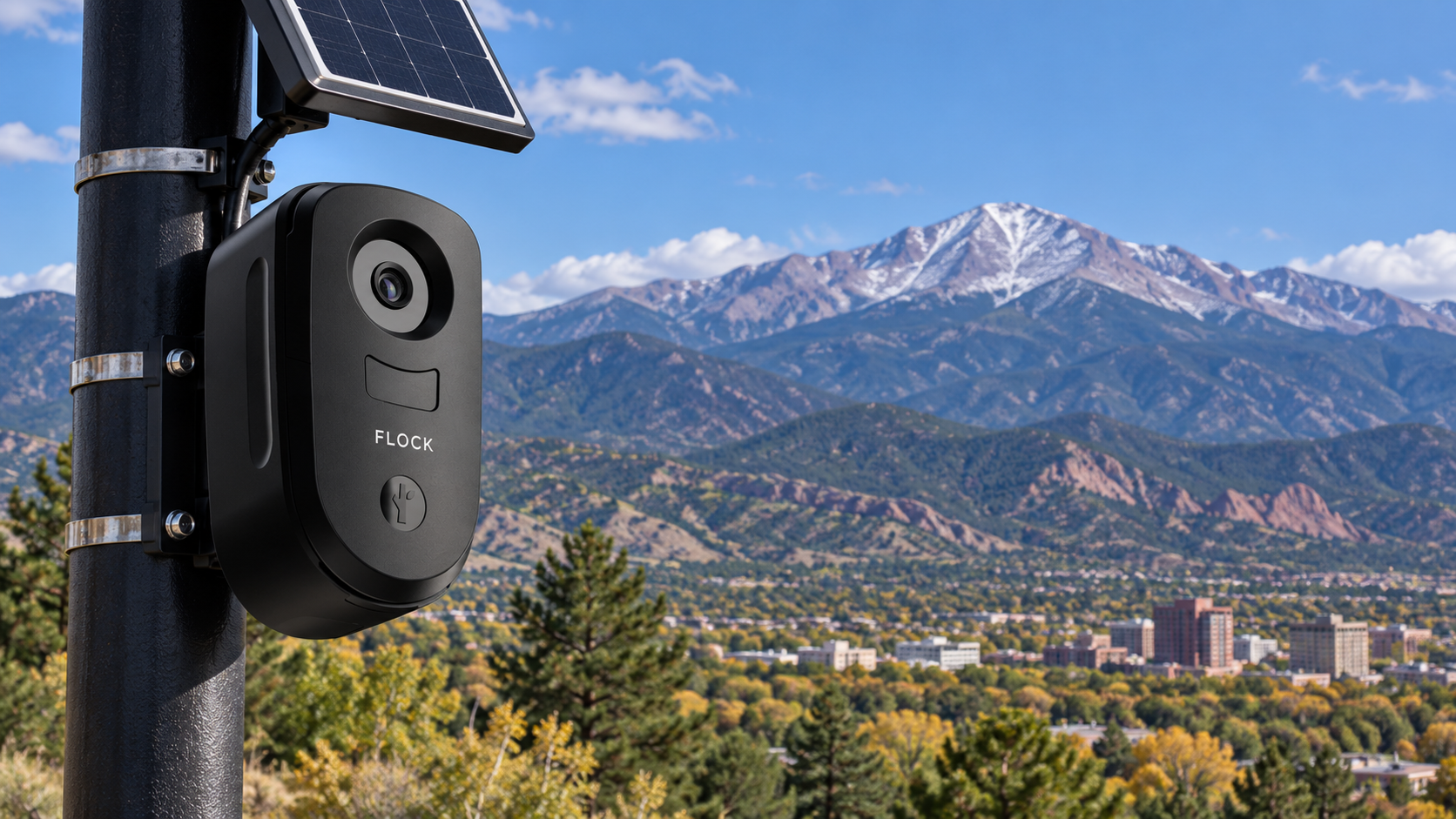
What Senator Hawley’s investigation means for Colorado drivers
Maher & Maher Law | Information current as of September 9, 2026
Flock camera searches can raise serious Fourth Amendment questions when police use stored sightings to reconstruct a person’s movements. Whether a particular search is unconstitutional depends on what officers accessed, how they obtained it, and the law that applies. The camera’s brand alone does not settle the issue.
A plate photographed on a public road can become part of a searchable history. The debate over Flock cameras and the Fourth Amendment turns on what that history may reveal about everyday life, even when each plate is read correctly.
Senator Josh Hawley’s investigation puts those practices under scrutiny. Understanding its scope and the limits of the court decisions discussed below helps separate a legitimate privacy concern from a claim that every camera is already illegal.
What Hawley is asking Flock to explain
On August 26, 2026, Hawley sent Flock Safety a letter seeking information about how the company collects, retains and shares data. The attached questions seek specifics about statewide and nationwide searches, retention periods, search justifications, misuse detection and audit records.
Those questions go beyond whether an officer can type a reason into a form. They ask whether the reason is checked, whether supervision is required and who detects abuse. For drivers, meaningful accountability depends on what happens after a search is logged.
On September 3, Hawley expanded the inquiry to Motorola Solutions, Verkada and Axon Enterprise. That broader scope matters locally because Colorado Springs police use Axon equipment.
The letters request information in a congressional investigation. They do not, by themselves, establish that a search violated the Constitution or prohibit a camera system.
One of the reports highlighting access controls came from Indiana. WRTV reported allegations against a former Jackson County deputy who prosecutors said searched one plate 2,055 times between December 31, 2025, and August 2, 2026. The report described official misconduct and fraud charges and said a routine audit uncovered the alleged misuse. Those allegations are not proof of guilt.
The concern illustrated by that report is unauthorized access to someone’s movements. Accurate plate recognition alone does not answer whether the searches were proper.
How a plate record becomes a privacy question
Automated license plate readers, usually called ALPRs, capture vehicle information at particular locations and times. Flock describes its readers as recording vehicle events, including plates and vehicle characteristics. Flock says its LPR cameras do not use facial recognition.
Repeated sightings can nevertheless suggest a routine. For example, records placing the same vehicle near a workplace each weekday and a medical office on several afternoons could invite conclusions about its owner’s life or health. The records would still need context: a vehicle’s location does not establish who drove it or why it was there.
Camera coverage also has limits. A database of sightings does not necessarily record every trip or provide a continuous route. The relevant questions include how many locations contributed records, the period searched, and how much of someone’s movements the results actually reveal.
Our earlier article, When the Camera Grid Gets It Wrong in Colorado, examines mistaken assumptions and incomplete evidence. This article addresses the privacy implications of collecting and searching the records in the first place.
Flock cameras and the Fourth Amendment in court
The Fourth Amendment protects against unreasonable government searches and seizures. The location-data cases below help explain the privacy issues, but their holdings need to be read within the facts each court decided.
In 2018, the U.S. Supreme Court held that obtaining the historical cell-site records at issue was a search and generally required a warrant supported by probable cause. The Court emphasized the revealing nature of accumulated location information. It also expressly left conventional security cameras undisturbed. Carpenter did not establish a universal warrant rule for license plate readers.
In Chatrie v. United States, decided June 29, 2026, the Supreme Court held that police acquisition of Google Location History information was a search. It sent questions about the warrant’s validity back to the Court of Appeals. Chatrie concerned a geofence request for phone-location information tied to a specified area and time. It did not decide the rules for ALPR records.
An actual ALPR decision offers another useful distinction. In Commonwealth v. McCarthy, Massachusetts’ highest court held in 2020 that the limited use of four readers at two bridges did not constitute a constitutional search on that record. The court also recognized that a sufficiently extensive network could reveal protected information about a person’s movements. McCarthy is a Massachusetts decision, not binding Colorado precedent.
Taken together, these decisions illustrate why a lawyer needs the actual search history. The privacy analysis cannot rest on a vendor name or a single image selected for a police report. Whether the reasoning applies to a Colorado case requires a separate assessment of the facts and governing law.
What Colorado Springs’ policy says
The CSPD ALPR policy effective July 15, 2026 identifies Axon fixed readers, Axon Fleet mobile readers, and Leonardo ELSAG mobile readers. Describing all of that equipment as “Flock cameras” would obscure which systems and rules are involved.
The policy requires a case number and a sufficiently detailed reason related to that case for stored-data searches. It also requires verification before enforcement based on an alert. Those are written requirements; their existence does not establish what occurred in a particular investigation.
Retention also varies by system.
| System and source | Stated routine retention | Exception |
|---|---|---|
| Flock’s current product explanation | 7 days by default | Customer requirements, applicable law or preserved investigation records |
| CSPD Axon policy | 30 days | Data preserved as evidence |
| CSPD ELSAG policy | 182 days | Relevant evidence must be preserved |
These periods describe different systems. Flock’s stated default should not be presented as CSPD’s Axon retention rule, and a routine deletion period does not mean every evidentiary copy disappears on that date.
A separate local policy debate is underway. KRDO reported on September 3 that proponents were seeking an ordinance prohibiting city ownership, leasing, contracting or operation of ALPR systems and similar technology. The proposal needs petition signatures to qualify for a vote. The reporting does not establish an enacted ban or guaranteed placement on the April 2027 ballot.
Residents can evaluate that policy proposal while courts address the legality of particular searches. A petition campaign does not resolve an individual criminal case.
If camera data is part of your case
If police connect your vehicle to an investigation, ask counsel to examine the records behind that connection. Useful questions include:
- What dates, locations, and camera networks did the search cover?
- Who ran the search, and what reason and legal authority did they record?
- Did investigators search another agency’s records or privately collected data?
- What original images, search results, and access logs were preserved?
- What other evidence connects the vehicle, its driver, and the alleged conduct?
These questions help distinguish the scope of the search from the conclusions drawn from it. A narrow excerpt in a report may not explain the full inquiry that produced it. Conversely, a system’s technical capacity does not prove officers used every available feature.
Timing matters when records may be deleted under routine schedules. Speak with counsel promptly about preserving relevant material, including evidence that may help your defense. Keep your own relevant records intact and avoid altering or deleting them.
A privacy argument also requires attention to the remedy. Determining that government conduct was a search is one step; deciding whether it was unlawful and what consequence follows involves additional questions. No article can establish that a particular person’s evidence will be excluded or charges dismissed.
Get advice grounded in the actual search
For Colorado drivers, the useful next step is to find out what investigators actually did with the data. Hawley’s inquiry identifies questions worth asking about access and oversight. The court decisions show why a legal assessment must account for the records and the way they were obtained.
If ALPR records or a digital location history are involved in an investigation affecting you, our Colorado Springs criminal defense team can discuss your situation and the evidence that needs attention. Request a free defense consultation with Maher & Maher Law.
This article provides general information. Advice about your rights and options requires review of your specific circumstances.
Frequently Asked Questions about license plate searches and privacy
Does a seven-day retention policy make Flock cameras constitutional?
No. A storage period is not a constitutional ruling. The cases discussed here do not establish a seven-day safe harbor for ALPR searches. The records obtained, the scope of access, and the governing law still matter. Flock also describes exceptions to its default deletion period.
Does switching from Flock to Axon resolve the privacy issue?
Changing vendors does not by itself establish that a search is lawful. The legal analysis turns on the records obtained and how investigators accessed and used them.
Does private ownership of the records eliminate Fourth Amendment protection?
Not automatically. Carpenter involved location records held by a wireless carrier. It illustrates why private possession alone does not settle whether government access is a protected search. Applying that reasoning to police access to privately collected camera records requires a separate legal analysis.
Will a finding that police conducted a search automatically dismiss a case?
No. A court must also consider whether the search was lawful and what remedy, if any, applies. In Chatrie, the Supreme Court found a search occurred and returned warrant-validity questions to the lower court. The result in a criminal case depends on its facts and law.